
Here's a complete article built on his five points, written in Dr. Asfaw's voice and in plain language for older readers and their families. It's about 900 words.
Title
Five Ways to Prevent Falls at Home
Short summary (148 characters)
Falls are a leading cause of injury in older adults, but many can be prevented. Here are five simple steps to make your home safer, starting today.
Article
Why falls matter
As a geriatrician, I see many older patients who have had a fall. About one in four adults aged 65 and older falls each year, and falls are the leading cause of injury in this age group. A single fall can lead to a broken hip, a head injury or a hospital stay. Even without an injury, a fall can leave a person afraid of falling again, which makes them less active, weaker and more likely to fall.
The good news is that many falls can be prevented. Most falls happen at home, during everyday activities like walking to the bathroom at night or reaching for something on a high shelf. Small changes at home can make a big difference.
These five practical steps can help make your home safe and reduce the risk of falls.
1. Clear walking paths
Many falls start with a trip. Walk through your home and look at the floor the way a visitor would.
Remove loose rugs, or secure them with double-sided tape or a non-slip backing.
Keep electrical cords and phone chargers along the walls, away from walkways.
Move small furniture, plants and boxes out of the paths you use most.
Clean up spills right away, especially in the kitchen and bathroom.
2. Improve lighting
Our eyes need more light as we age, and they take longer to adjust to the dark. Poor lighting makes it easy to miss a step or an object on the floor.
Use bright lights in hallways, stairways and entrances.
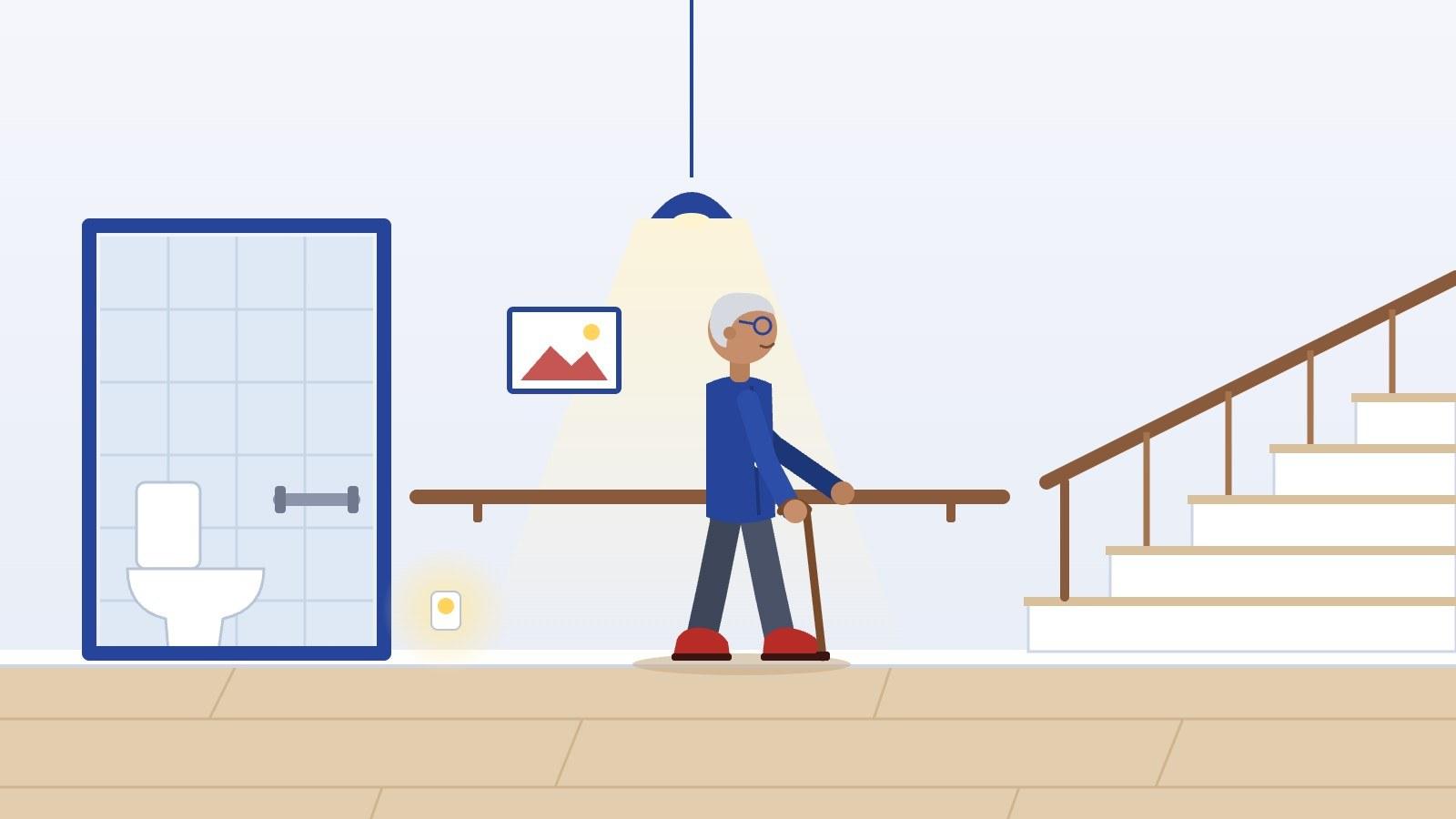
Put night lights between the bedroom and the bathroom, so you never walk in the dark.
Keep a lamp or flashlight within reach of your bed.
Make sure there are light switches at both the top and bottom of the stairs.
3. Make bathrooms and stairs safer
The bathroom and the stairs are two of the most common places for falls. Wet floors and steps leave little room for error.
Install grab bars beside the toilet and inside the shower or tub. Towel racks are not strong enough to hold your weight.
Use a non-slip mat or non-slip strips in the shower and tub.
Consider a shower chair and a raised toilet seat if standing or sitting down is difficult.
Make sure stairs have secure handrails on both sides, and use them every time.
Keep stairs free of clutter, and mark the edge of each step with bright tape if it is hard to see.
4. Wear supportive footwear
What you wear on your feet matters more than most people think.
Choose well-fitting shoes with non-slip soles and a closed back, even inside the house.
Avoid walking in socks alone, loose slippers or backless shoes.
Avoid high heels and shoes with smooth, slippery soles.
If your feet are swollen, painful or numb, tell your doctor. Foot problems can affect your balance.
5. Keep everyday items within easy reach
Climbing and over-reaching can quickly throw you off balance.
Store the things you use most often between waist and shoulder height.
Avoid climbing on chairs, stools or boxes. If you must reach something high, use a sturdy step stool with a handrail, or ask someone for help.
Keep your phone with you, so you can call for help if you do fall.
Your health matters too
A safe home is only part of the picture. Many falls are caused by health problems that can be treated. Talk with your doctor about:
Your medicines. Some medicines, and some combinations of medicines, can cause dizziness or drowsiness. A medicine review can find and fix these problems.
Your vision. Have your eyes checked at least once a year, and keep your glasses up to date.
Your strength and balance. Regular, safe exercise, such as walking, tai chi or exercises from a physical therapist, helps keep your muscles strong and your balance steady.
Dizziness or unsteadiness. Feeling light-headed when you stand up, or unsteady when you walk, is not just "part of getting older." Tell your doctor.
If you have fallen
If you or a loved one has had a fall, even one without an injury, please tell your doctor. A fall can be a sign of a health problem that needs attention. Finding and treating the underlying cause is the best way to prevent the next one.
If someone has fallen and is badly hurt, cannot get up, has hit their head or is confused, call 911.
At AZ Medical Services, we check fall risk as part of our geriatric care, including balance, walking, medicines and safety at home. To book a visit, call us at (718) 708-4726.
This article is for general information and is not a substitute for medical advice. Please talk with your doctor about your own health.